Tidy
In this article
- Every dropshipped sale produces two documents: the marketplace settlement (sales, fees, refunds) and the supplier invoice (the true COGS). Booking one without the other makes the margin a guess.
- Without inventory to count, COGS accuracy depends entirely on matching supplier invoices to orders — price changes, shipping variances and invoicing errors all land in COGS.
- Refunds are a double hit: you refund the buyer and eat the supplier’s restocking or non-return policy — track supplier refund recovery separately from buyer refunds.
- Chargebacks hit dropshippers harder: the marketplace reverses the sale while the supplier has (usually) already shipped — prevention through tracking and delivery proof matters more than in any other model.
Two documents for one sale #
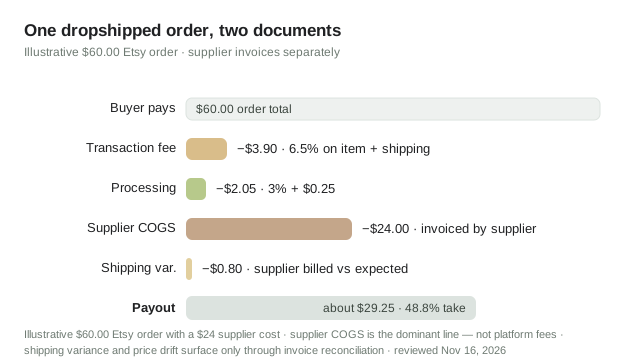
A standard marketplace sale produces one document: the settlement. A dropshipped sale produces two, from two different companies: the marketplace settlement (sales, refunds, platform fees, the net deposit) and the supplier invoice (the product cost, their shipping charge, sometimes a dropship fee, in their currency). The sale isn’t fully booked until both are in the ledger — the settlement without the invoice overstates margin by exactly the product cost, and the invoice without the settlement books a cost with no revenue.
The timing gap between the two documents is the dropshipping bookkeeping problem in miniature. The settlement arrives on the marketplace’s payout cycle; the supplier charges your card at fulfillment. Between them sits everything that can go wrong: out-of-stocks, price changes between order and invoice, shipping upgrades you never approved, duplicate charges. The bookkeeping pattern that handles all of it is the matching discipline this site teaches everywhere — two documents, one sale, reconciled to each other.
COGS when you never touch the goods #
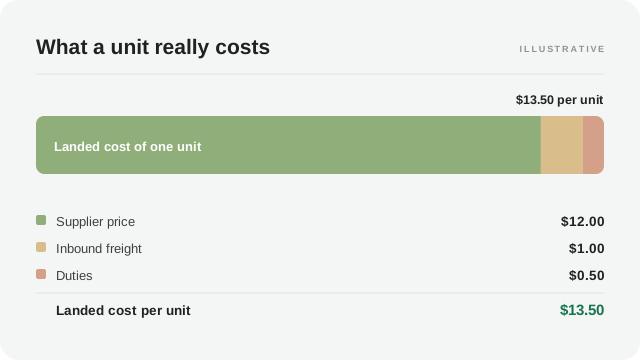
Dropshipping removes the inventory warehouse but not the inventory accounting — it changes where COGS comes from. Instead of average cost over received stock, COGS per unit is the supplier’s invoiced cost for that order: product, their shipping charge to you, and any dropship fee. Because you never count physical stock, the invoice-matching is the only accuracy mechanism: post COGS when the supplier invoice for an order is recorded, not when the order sells (on accrual books the sale and the supplier cost should land in the same period — if the supplier invoices later, accrue the estimated cost at month end and true up on invoice).
The drift risks are specific and worth naming: supplier price changes (a product repriced upstream bills your old cost expectation plus a surprise), shipping variance (their shipping charge differs by destination — the same SKU can cost different amounts per order), and currency (a supplier billing in their currency converts at the rate on your card statement, which moves monthly). The month-end check: recompute each product’s average invoiced cost from the supplier statements and compare against the cost you’re pricing from. The COGS guide’s drift checks apply with the supplier statement as the source.
Supplier invoices: reconcile or bleed #
The monthly supplier reconciliation is the dropshipper’s settlement review. For each supplier: the statement total, the count of orders, and — the line that finds real money — orders billed that don’t match orders shipped. Duplicate charges, canceled-but-billed orders, shipping upgrades billed without approval, and price changes implemented mid-month are all common, all small, and all invisible in a blended total. Suppliers in this space also change product costs without notice; the reconciliation is how repricing stays ahead of margin erosion.
The refund path needs the same rigor in reverse. When a buyer returns an item, the supplier’s refund policy decides what you recover: full product credit, credit minus restocking, or nothing (common on made-to-order or international returns). Track supplier refund recovery rate per supplier — it is the real cost of your return policy, and it varies enormously across suppliers. Our returns guide covers the buyer side; the supplier side is the same discipline pointed at a different counterparty.
Chargebacks and refunds: the double hit #
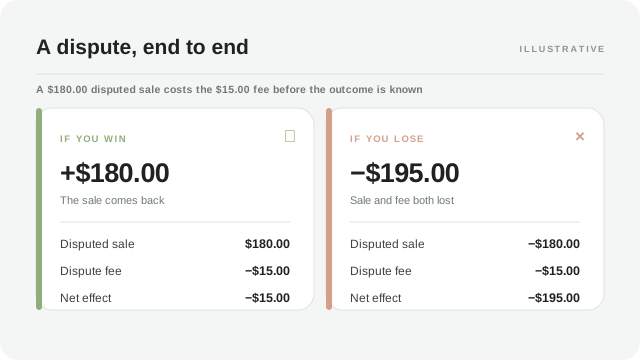
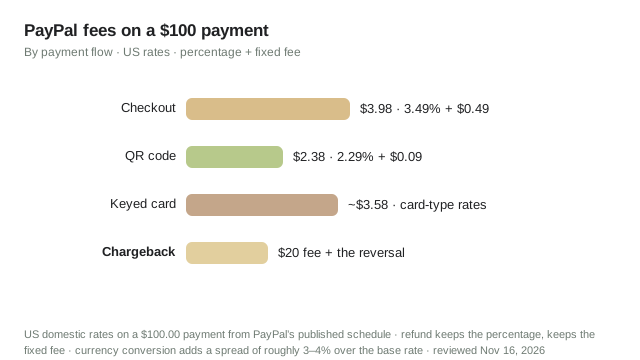
Chargebacks hurt dropshippers more than any other model because the timeline works against you: the marketplace or processor reverses the buyer’s payment immediately, but the supplier shipped days ago and rarely accepts returns on the dropship terms. The loss is the full product cost plus the chargeback fee plus the revenue — three lines that must stay separate in the books, exactly as the chargebacks guide teaches for payment disputes generally.
Prevention is the same evidence discipline at a longer chain: tracking numbers from the supplier attached to every marketplace order (delivery proof is the dominant dispute factor), delivery addresses that match the buyer’s stated address, and realistic shipping-time promises that reduce the “item never arrived” dispute category at the source. Dropshippers with weak tracking data lose disputes they could have won, and the loss compounds: repeated disputes escalate to account-level payment holds.
Multi-supplier margins #
Most dropshipping catalogs draw from several suppliers with different cost structures, shipping speeds and refund policies. The books can make each supplier a profit center: revenue, supplier COGS, refund recovery and processing fees grouped per supplier, so the answer to “which supplier should I drop?” is a report rather than a debate. The same per-SKU habit from the take rates guide applies — contribution margin per product after the platform stack and the supplier cost, recomputed as supplier prices move.
The pricing consequence deserves emphasis: dropshipping margins are thin enough that a supplier’s price change, a marketplace fee change (the fee tracker logs them), or a processing-fee update can flip a SKU from profitable to negative. Price from the recomputed cost, not from the price you set when the supplier was cheaper — the catch-up discipline of reconciling to source documents is what keeps the cost side of that comparison real.
Sales tax and nexus for dropshippers #
The tax question dropshippers ask most — “who collects sales tax when my supplier ships from another state?” — has a layered answer. On marketplace channels, the facilitator collects on marketplace orders as usual. On your own store, you collect — and your nexus depends on your own economic activity into each state plus any inventory the supplier holds for you there (some fulfillment networks and 3PLs create inventory nexus the same way FBA does). The treatment and threshold logic are in our sales tax guide; the dropshipping-specific trap is assuming the supplier handled it — suppliers almost never do.
The books treatment #
The account structure that makes dropshipping readable: sales by channel, supplier COGS by supplier, marketplace fees by type, payment processing separate, refunds on their own line, chargeback fees separate from refunds, and a supplier-payable account for invoiced-but-unpaid costs. The payment account pattern (PayPal, or the card the suppliers bill) is the PayPal clearing-account model — supplier charges reconcile to invoices in that account, never blended into purchases.
The month-end routine is the matching loop: settlements to bank deposits (the clearing account pattern), supplier statements to orders (the invoice reconciliation), and the two tied together per product for margin. Everything posts only when it reconciles — which is the standard this site applies to every channel, applied to the one model where the reconciliation crosses companies.
TidyPayouts keeps settlements and supplier costs on separate reviewable lines — so dropship margins are computed, not guessed.
Choosing suppliers: the cost signals that matter #
The supplier relationship drives every number in a dropshipping book, and three signals at selection time predict the bookkeeping quality for years. Invoicing transparency: a supplier who breaks out product cost, shipping and any dropship fee on each invoice makes the COGS reconciliation trivial; one who bills a flat “order total” makes it impossible to separate a price change from a shipping surprise. Refund policy clarity: the supplier’s return terms in writing — restocking percentage, return-window length, who pays return freight — because those terms become your recovery rate, and the recovery rate is a margin line. Shipping-time honesty: a supplier who states processing plus transit days accurately reduces the dispute rate (and therefore the chargeback line) more than any other single factor.
The accounting structure can be set up before the first order: a supplier-payable account per supplier (or one consolidated supplier-payable with sub-accounts), a COGS account per supplier if volumes justify it, and the payment rail (PayPal, Payoneer, wire) in its own clearing account. The clearing account guide covers the per-channel pattern; dropshipping adds one more dimension — the supplier — to the same structure. The setup cost is hours; the reconciliation speed afterwards is years.
Pricing from real costs, not supplier list prices #
Dropshipping prices fail in a predictable way: the seller sets retail from the supplier’s current list price, the supplier reprices silently, and the margin evaporates before anyone notices. The defense is the same quarterly recomputation this site teaches for take rates and fee schedules — pull the actual invoiced costs from the last quarter’s supplier statements, recompute the contribution ceiling per product, and flag any SKU whose ceiling has moved below the current retail. The take rates method is exactly this arithmetic applied to a different fee schedule, and the fee-change tracker logs the platform-side moves that also affect the same SKUs.
The pricing trigger worth automating: if the supplier’s invoiced cost for a SKU rises more than 5% from your pricing baseline, that SKU gets repriced or dropped — not because 5% is magic, but because a silent 5% cost increase compounds with the next one, and the seller who catches it in quarter one reprices calmly while the seller who catches it in quarter four has already spent three months selling at a loss.
Common questions #
How do I record COGS for dropshipped orders?+
COGS per order is the supplier’s invoiced cost — product, their shipping charge and any dropship fee. On accrual books, accrue the estimated cost when the sale ships and true up to the supplier invoice; on cash books, the card charge is the event. Without physical inventory to count, the invoice reconciliation is the only accuracy mechanism — recompute average invoiced cost per product monthly.
The supplier charged more than expected. What do I do?+
First reconcile: was it a price change, a shipping variance, a duplicate or a canceled-but-billed order? Price changes go into COGS and into a repricing review; duplicates and unbilled upgrades are disputed with the supplier (with order IDs); genuine cost increases eventually reach your prices. The reconciliation against order data is what tells the three apart.
What happens in my books when a buyer chargebacks a dropshipped order?+
Three lines: the reversed sale, the chargeback fee, and the supplier cost you almost certainly don’t recover (the goods already shipped to the buyer). Prevention carries more value than bookkeeping here — supplier tracking numbers attached to every marketplace order are the dominant dispute-winning evidence.
Do I need inventory tracking software if I dropship?+
Not for quantity-on-hand — the supplier holds the stock — but for cost accuracy: products change supplier price without notice, and margins drift silently. A monthly average-invoiced-cost recomputation per product (from supplier statements) gives inventory-tracking’s benefit without tracking physical stock.
Who collects sales tax when the supplier ships from another state?+
On marketplace orders, the marketplace facilitator — as always. On your own store, you collect where you have nexus, which includes your own sales volume into the state and sometimes inventory the supplier holds there for you. Suppliers almost never handle the seller’s tax; the sales tax guide covers the nexus and registration logic.
My supplier refunds only part of the cost on returns. How do I book it?+
The buyer refund posts in full to refunds; the supplier’s partial recovery posts to a supplier-recovery line. The gap — the unrecovered portion — is the real cost of the return, and the recovery rate per supplier is worth tracking: it prices your return policy per supplier and flags suppliers whose terms make returns ruinous.
Should I book supplier charges to the same account as marketplace fees?+
Never. Supplier COGS and marketplace fees are different kinds of cost with different documents, different reconciliations and different owners. Blending them turns margin analysis into archaeology — the fee-bucket structure in the fee list guide applies, with supplier COGS as its own top-level line.
Is a dropshipping business treated differently at tax time?+
The income and deduction mechanics are ordinary business reporting; the dropshipping-specific questions are substantiation (supplier invoices as COGS support), inventory accounting when you never hold stock, and multi-state sales tax from supplier shipping origins. None are exotic, but all benefit from the document discipline this guide describes and a conversation with a tax professional.
Sources and review date #
Written November 16, 2026 from general bookkeeping practice — the method is the matching discipline this site teaches, applied to the supplier/marketplace document pair. Tax nexus and treatment questions deserve a licensed professional; examples are illustrative.